Call for Nominations: CALI Board of Directors

The Center for Computer-Assisted Legal Instruction (CALI) is seeking nominations of qualified and enthusiastic individuals to fill vacant positions on its Board of Directors. If you know of someone who would like to contribute to the research and development, strategic planning and governance of CALI, then consider nominating them for the CALI Board of Directors. Please clear it with the person first to make sure they WANT to be nominated. self-nominations are acceptable.

Mid-Semester Blues...

We're just about at the half-way point for the Fall Semester, which for law students means it's time to get serious about understanding and organizing class materials and notes.  Remember - no matter how smart you are, you're not going to be able to learn all of this stuff the night before your final exam.

Sorry, that's just not how law school works.

And if you find you've either been slacking off a bit or just not quite understanding what is going on, remember - IT'S NOT TOO LATE.  You still have a good six weeks to get yourself ready for finals.  And CALI can help!

A2J Author Course Project - Proposals due October 15!

Time is running out!  Proposals for the second round of the A2J Author Course project are due Wednesday, October 15.

The A2J Author Course Project is a coordinated effort by the Center for Computer-Assisted Legal Instruction (CALI®), the Center for Access to Justice & Technology at IIT Chicago-Kent College of Law and Idaho Legal Aid Services. Faculty selected for inclusion in this project will receive a stipend to either create a new course - or adapt an existing one - that uses A2J Author® software as a tool for teaching students technology and practice skills. No technological experience is required to participate in this project and training and support on A2J Author® will be provided.

The CALI Roadshow

Does your law school have a Library Fair?  Or a Database Day?  How about a Faculty Brown Bag Series?  Or are you in a metropolitan area with some other law schools and you want an excuse to meet with the faculty and staff of them?

CALI WILL BE THERE!

Request for Proposals: A2J Author Course Project

CALI is happy announce the second round of the A2J Author® Course Project!

The A2J Author Course Project is a coordinated effort by the Center for Computer-Assisted Legal Instruction (CALI®), the Center for Access to Justice & Technology at IIT Chicago-Kent College of Law and Idaho Legal Aid Services. Faculty selected for inclusion in this project will receive a stipend to either create a new course - or adapt an existing one - that uses A2J Author® software as a tool for teaching students technology and practice skills. No technological experience is required to participate in this project and training and support on A2J Author® will be provided.

It’s Never Too Early in the Semester to Start Taking CALI Lessons

If you haven’t been warned yet, law school exams are not like undergraduate exams. If you were able to get by with cramming the night (or even week) before finals, unfortunately that’s not going to work now. Even if it did work for your exams, that’s not the way to retain knowledge – and you’re going to want to remember the law for the bar exam and your future career!

Start Law School Off Right!

Did you know CALI has resources that not only help you learn the law, but also ones that help you learn how to be a better student? It’s true!

Law School Materials for Success, written by Dean Barbara Glesner Fines, is an book and podcast series filled with tips and tricks to make the law school experience as painless as possible.

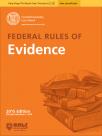
Federal Rules of Evidence 2015

Rules of evidence are, as the name indicates, the rules by which a court determines what evidence is admissible at trial. In the U.S., federal courts follow the Federal Rules of Evidence.

This series of Federal Rules books, consisting of the Federal Rules of Evidence, Criminal Procedure and Civil Procedure,  are powered by the Legal Information Institute at Cornell Law School, and created in partnership with The Center for Computer-Assisted Legal Instruction (CALI). You may download the books for free, but remember that publishing these books is not free for our organizations.

Pages