Lesson Viewed
Summary Judgment under Rule 56
This lesson teaches the basic elements of summary judgment under Rule 56.
We are going to make necessary and critical updates to our systems during this timeframe. While we anticipate using only a portion of the time, members should be prepared for the site being offline for the full 2 days. During this maintenance window www.cali.org and other sites including Classcaster, Lawbooks, and our authoring systems will be unavailable.
This lesson teaches the basic elements of summary judgment under Rule 56.

The rise of the self-represented litigant has disrupted the civil justice system. Courts no longer rely on lawyers to manage the litigants, but the due process remains so courts have had to step-up and create user-friendly systems for lay people. By providing comprehensive, 24/7 self-help services such as forms, instructions, tailored procedural guidance, and triaged case flow management; courts can create transparent and navigable systems. However, the bespoke approach contemplated in an adversarial process is lost without lawyers. Lawyers are still very much needed, however, their new role is only beginning to be understood. It is one that has paradoxically narrowed in focus yet, because of technology, expanded in delivery opportunities. Legal education has an opportunity to equip new lawyers with the legal and practical skills to be successful in today’s legal market that demands 24/7 services accessible by cellphone from anywhere in the world while engaging more autonomous clients who seek refined and targeted legal advice, strategy and big-picture analysis. This talk will explore the many opportunities that are presenting in this re-aligning market, and consider the negative and positive impacts, particularly with respect to technology, on access to justice.
This lesson covers Delaware primary legal research resources including the state's constitution, statutory code, legislative history materials, administrative code, administrative bulletin, case decisions, court rules, and legal ethics materials.
This lesson will familiarize you with primary and secondary sources available in South Dakota. It covers South Dakota primary law including the South Dakota Constitution, statutes, legislative history, municipal codes, administrative law, and court decisions. The secondary sources section of the lesson provides a general overview of secondary sources and how you can use them in your research as well as coverage of South Dakota specific secondary sources.

Matt Novak is an associate professor and reference librarian at the Marvin and Virginia Schmid Law Library of the University of Nebraska-Lincoln College of Law. Prior to joining the Schmid Law Library, he was an Assistant Public Defender with the Missouri Public Defender System. In addition to his reference duties, Professor Novak co-teaches the legal research component of the First Year Legal Research and Writing Course. He has lectured on legal research and legal information technology issues. Professor Novak received his B.A. from the University of Nebraska-Lincoln, his J.D. from the University of Nebraska-Lincoln College of Law, and his M.A. in Library Science from the University of Missouri-Columbia. He is a member of the Nebraska Bar Association, the Missouri Bar Association, the American Bar Association, the American Association of Law Libraries, and the Mid-America Association of Law Libraries.
This lesson is part of a series of lessons about Discovery. Discovery is the process through which the parties exchange information, documents, electronically-stored information, and sometimes even tangible things. This particular lesson focuses on the processes lawyers use to create, respond to, and have disputes about discovery.
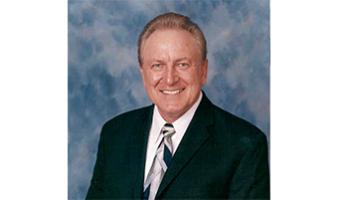
Joe Grohman joined the College of Law's full time faculty in August 1983. His primary teaching responsibilities involve Property, Real Property Closing Workshop and Real Estate Transactions and Finance. For the Center for Computer Legal Instruction (CALI), he was a member of the Board of Directors and continues as a member of the Editorial Board. As noted in the publications section of his curriculum vitae, he has authored and co-authored various articles, treatise chapters, and CALI interactive lessons for law students. For Nova Southeastern University he serves as the Executive Dean for Faculty Development and is active in the university's academic program review process, chairing NSU's Academic Review Committee.

Professor Rowley graduated Phi Beta Kappa from Baylor University in economics and political science. After earning his M.P.P. from Harvard University's Kennedy School of Government, he returned to Baylor to teach economics and public policy. He earned his J.D. from the University of Texas School of Law, where he served as an executive editor of the Texas Law Review and as a judicial intern to then-Texas Supreme Court Justice Lloyd A. Doggett. Following a clerkship with Judge Thomas M. Reavley of the U.S. Fifth Circuit Court of Appeals, he practiced law in Houston for five years, with an emphasis on commercial litigation in federal and state trial and appellate courts.
Professor Rowley taught at Mississippi College School of Law and Emory University School of Law before joining the Boyd School of Law faculty in 2001. He spent the 2007-08 academic year as the Charles E. Tweedy, Jr. Visiting Chairholder at the University of Alabama School of Law. His current and recent teaching areas are Contracts, Contract Theory & Policy, Economics and the Law, Law & Popular Culture, Payment Systems, Sales & Leases, and Secured Transactions. He has previously taught Bankruptcy and Other Forms of Debt Collection, Business Organizations, and Securities Regulation. He was the founding host of the law school’s Law & Popular Culture Film Series.
Professor Rowley currently writes primarily in the areas of commercial law, contracts, and law and popular culture.
Professor Rowley is an elected member of the American Law Institute and a Uniform Law Commissioner. As an ALI member, he actively consulted on the 2010 Amendments to UCC Article 9 and is actively consulting on the Restatement of the Law of Consumer Contracts and the Restatement of the Law of Liability Insurance. As a Uniform Law Commissioner, he serves on the drafting committees for the Regulation of Virtual Currency Businesses Act and the Amended Tribal Secured Transactions Act, as well as a study committee on consumer debt, and a newly-formed academic liaison committee.
Professor Rowley is a Consumer Fellow to the ABA Business Law Section’s Consumer Financial Services Committee, where he also chairs a task force on the Restatement of the Law of Consumer Contracts and is incoming co-editor of the Annual Survey of Consumer Financial Services Law for The Business Lawyer. He previously chaired the AALS's Section on Commercial and Related Consumer Law, the AALS’s Section on Contracts, and the ABA Business Law Section’s Uniform Commercial Code Committee’s Sale of Goods Subcommittee, and was the UCC Committee’s inaugural Developments Reporter.
This lesson is designed to help students understand the basic principles of diversity and alienage jurisdiction in the federal district courts. It examines both the constitutional authority for diversity and alienage jurisdiction, U.S. Const. Art. III, § 2, and the statutory provisions that bestow diversity and alienage jurisdiction on the federal district courts, 28 U.S.C. § 1332(a)(1)-(a)(3). It consists of both text and explanatory problems.